The Bartender’s Handshake

Why Fernet and Amaro Hold a Special Place Behind the
Bar
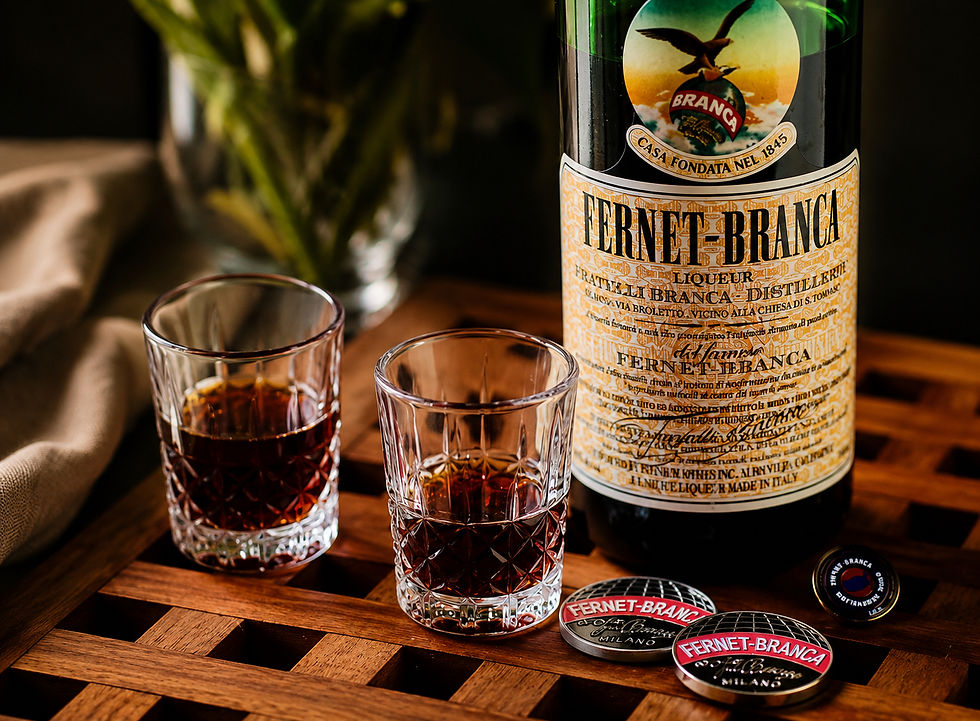
Walk into a great cocktail bar after closing time and you may notice a familiar bottle being passed between bartenders. The liquid is dark, intensely herbal, unapologetically bitter, and often followed by a raised glass between industry friends.
That bottle is usually Fernet-Branca, and the shared pour is known as the bartender’s handshake.
But what exactly is Fernet? Why does it taste so different from other spirits? And how did something so bitter become one of the most recognized traditions in bartender culture?
Welcome to the world of amaro.
What Is Amaro?

Amaro is the Italian word for “bitter.” It refers to a broad family of herbal liqueurs
traditionally made by infusing a base spirit with combinations of herbs, roots, flowers, citrus peels, bark, spices, and other botanicals.
Sugar is usually added to balance the bitterness, but every amaro has its own personality. Some are bright, citrusy, and gently bittersweet, while others are dark, earthy, minty, floral, or aggressively bitter.
Popular examples include:
Amaro Montenegro
Averna
Cynar
Ramazzotti
Braulio
Amaro Nonino
Fernet-Branca
Amaro can be served neat, over ice, with soda, or incorporated into cocktails. It is not one specific flavor. It is an entire category built around bitterness, botanical complexity, and balance.
So, What Is Fernet?

Fernet is an especially intense style within the amaro family. Compared with softer, sweeter amari, Fernet is typically drier, darker, more medicinal-tasting, and considerably more bitter.
Fernet-Branca is the most famous example. Created in Milan in 1845, its closely guarded recipe contains 27 herbs, roots, and spices sourced from four continents. Its flavor is bold and unmistakable, with notes that can suggest mint, eucalyptus, spice, dark herbs, licorice, earth, and menthol. Fernet-Branca
For someone tasting it for the first time, Fernet can be a shock. It is not designed to taste like a sweet, easy-drinking liqueur. It challenges your palate, and that is part of its appeal.
From Herbal Tonics to the Back Bar
Long before modern cocktail bars, herbs, roots, and spices were commonly steeped into alcohol to create tonics and botanical preparations. Alcohol was useful for extracting and preserving flavors from these ingredients.
Many commercial amari emerged from that tradition and were promoted historically as restorative tonics or after-dinner digestifs. Fernet was associated with claims involving digestion, the stomach, and general wellness.
That history explains why people still describe Fernet as tasting “medicinal.” However, that description refers to its flavor and historical reputation. Fernet is still an alcoholic beverage, not medicine, and its traditional claims should not be confused with proven modern health benefits.
Today, amaro remains closely connected with the Italian tradition of the digestivo, a small pour enjoyed after a meal. Whether it actually settles your stomach is another question, but culturally, the ritual continues.
Why Is Fernet Called the Bartender’s Handshake?

Within the hospitality industry, sharing a shot of Fernet became a way for bartenders to recognize and connect with one another.
It can be a welcome after visiting another bar, a quick toast after a difficult shift, or a sign of mutual respect between people who understand the realities of working in hospitality.
Over time, this ritual earned the nickname the bartender’s handshake.
There is no secret password or official ceremony. It is simply an industry tradition built around community.
For bartenders, Fernet represents more than a shot. It carries a feeling of belonging. If you know the bottle, understand its intensity, and willingly raise a glass, you are part of the conversation.
You do not have to work behind a bar to enjoy it, though. Trying Fernet is one small way to experience a piece of cocktail culture from the other side of the bar.
Why Bartenders Love Bitter Flavors
Great cocktails depend on balance. Sweetness and acidity may be the easiest components to recognize, but bitterness creates contrast, structure, and length.
A small amount of amaro can completely transform a drink. It can:
Control excessive sweetness
Add herbal and botanical complexity
Connect flavors that otherwise feel disconnected
Give a cocktail a longer, more interesting finish
Introduce notes of citrus, spice, mint, roots, or earth
Turn a familiar classic into something unexpected
Bartenders also love amaro because every bottle behaves differently. One may taste like burnt orange and caramel, while another suggests alpine herbs, artichoke, mint, or baking spice.
That variety gives mixologists an enormous library of flavors to work with.
Using Fernet and Amaro in Cocktails
Amaro does not always need to dominate a drink. In many cocktails, even a bar spoon or quarter ounce can add enough bitterness and complexity to change the entire experience.
Fernet works especially well with:
Rye whiskey and bourbon
Coffee and espresso
Chocolate and cacao
Mint
Ginger
Cola
Citrus
Pineapple
Rich syrups and dessert flavors
Classic examples include the Toronto, which combines rye whiskey with Fernet, and the Hanky Panky, which uses a smaller amount of Fernet alongside gin and sweet vermouth.

The modern Industry Sour pushes Fernet into the spotlight with green Chartreuse, lime, and sugar.
In Argentina, Fernet and cola has become an enormously popular combination known as the Fernandito. The cola softens Fernet’s sharper edges while complementing its dark herbal character.
How Should a Beginner Try Amaro?
If Fernet sounds intimidating, you do not need to begin with a full room-temperature shot.
Start with a softer amaro served over ice with an orange peel. You can also try amaro with soda water or use a small amount in a whiskey, coffee, or citrus-forward cocktail.
If you want to approach Fernet specifically, try it chilled, mixed with cola, or incorporated into a balanced cocktail before drinking it neat.
Bitterness is a flavor your palate learns to appreciate. Coffee, dark chocolate, hoppy beer, and amaro can all seem intense at first. With time, you begin noticing the layers beneath the bitterness.
Welcome to the Industry
The bartender’s handshake is not really about proving that you can handle a bitter shot.
It is about tradition, hospitality, and the shared culture surrounding the craft.
Fernet and amaro remind us that cocktails do not need to be immediately sweet or familiar to be enjoyable. Sometimes the most memorable flavors are the ones that make you pause, taste again, and discover something new.
Join the Saints & Spirits Community
Step behind the bar with us for original cocktail recipes, industry knowledge, mixology techniques, and a closer look at the rituals shaping modern cocktail culture.
Bring the Experience to Your Next Event
Planning a celebration? Saints & Spirits offers private bartending, custom cocktail menus, and interactive cocktail classes throughout Phoenix and the West Valley. Let’s create an experience your guests will be talking about long after the final pour.



Comments