What Cocktail Competitions Have Taught Me About Creativity, Pressure, and Growth

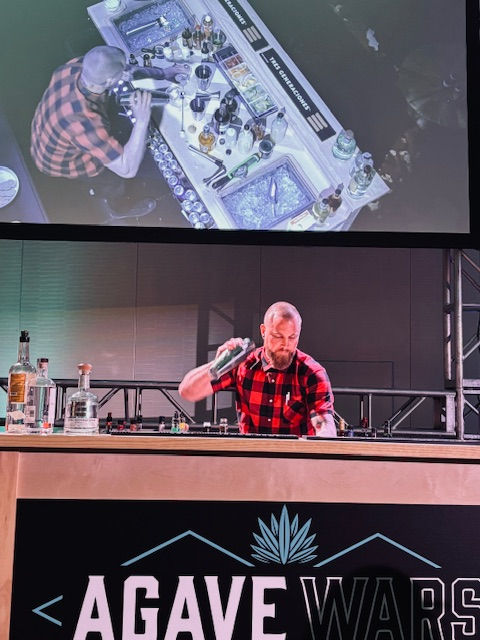
Cocktail competitions look glamorous from the outside. Guests see the finished drink, the presentation, and a bartender confidently explaining the story behind the glass.
What they do not see are the failed test batches, last-minute adjustments, ingredient restrictions, timed presentations, and countless decisions that happen before that cocktail ever reaches the judges.
I have entered competitions featuring brands such as Empress 1908 Gin, Angostura Rum, Cointreau, Rémy Martin, iichiko Saiten Shochu, and other spirits.
Every competition has challenged me differently, but each one has made me a stronger and more intentional mixologist.
Winning is always the goal, but the real value goes far beyond a trophy.
A Great Cocktail Needs More Than an Interesting Recipe

Competition cocktails usually begin with an idea, story, ingredient, or required spirit. The challenge is turning that inspiration into something that actually tastes good.
It is easy to get excited and add too many ingredients. I have learned that complexity does not automatically create quality. Every ingredient needs a purpose.
A competition drink should have creativity, but it still needs balance. The judges should be able to understand the cocktail without fighting through too many competing flavors.
The strongest concepts are often the ones that can be explained clearly:
What inspired the cocktail?
Why was each ingredient selected?
How do the flavors work together?
What should the guest experience from the first aroma to the final sip?
If those questions are difficult to answer, the drink probably needs more work.
The Story Must Connect to the Glass

A strong story can make a cocktail memorable, but the drink still has to deliver on that story.
For one shochu competition, I developed a cocktail inspired by The Great Wave off Kanagawa. The ingredients, colors, seaweed syrup, yuzu, plum, sake foam, and presentation were all chosen to support that visual and cultural inspiration.
The lesson was not simply to make a themed cocktail. It was to make sure the theme could be experienced through the aroma, flavor, texture, color, and garnish.
A story should never feel attached to a finished drink as an afterthought. It should guide the recipe from the beginning.
Balance Is More Important Than Complexity
Competitions encourage creativity, but creativity needs control.
Fruit purées, liqueurs, shrubs, syrups, bitters, foams, infusions, and specialty garnishes can all elevate a cocktail. They can also quickly overpower one another.
During R&D, I constantly ask:
Is the base spirit still present?
Is the sweetness covering the acidity?
Does the garnish improve the experience?
Is this technique making the cocktail better?
Could an ingredient be removed without losing the idea?
Sometimes the smartest adjustment is not adding something new. It is removing an ingredient, reducing a syrup, changing the acidity, or allowing the featured spirit to lead.
That discipline has changed how I create cocktails both for competitions and for guests.
Pressure Exposes Every Weak Point

Creating a great drink during R&D is one challenge. Reproducing it consistently while being timed and watched is another.
Competition pressure exposes problems immediately. A garnish may take too long. A bottle may be placed in the wrong position. A presentation may sound natural during practice but feel rushed in front of judges.
Success requires more than a good recipe. It requires organization.
I have learned to practice the complete process:
Setting up ingredients in the correct order
Measuring efficiently and accurately
Managing ice and dilution
Preparing garnishes ahead of time
Building identical cocktails
Cleaning while working
Explaining the story without losing focus
Finishing within the required time
Those habits directly translate to private events. Preparation, consistency, and calm execution are just as important when serving a room full of guests.
Feedback Is Part of the Process

Not every cocktail advances. Not every judge experiences a drink the same way. That can be difficult after spending hours developing a concept, but honest feedback is one of the most valuable parts of competing.
A judge may notice that the drink is too sweet, the spirit is hidden, the presentation is unclear, or the garnish does not connect strongly enough to the concept.
The goal is not to take every opinion personally. The goal is to identify useful patterns and become better.
Competition results do not always tell the complete story of a bartender’s ability.
However, the preparation reveals where you are confident, where you need improvement, and how you perform when the pressure is real.
Competitions Have Shaped Saints & Spirits

Cocktail competitions have influenced the way I approach every Saints & Spirits menu.
They have taught me to create with intention, respect the featured spirit, balance every ingredient, prepare for service, and consider the complete guest experience.
A private-event cocktail does not need to be as technically complex as a competition entry. In fact, it usually should not be. But it should still receive the same level of thought.
The flavor should make sense. The garnish should be intentional. The presentation should feel polished. Most importantly, the drink should be memorable for the people enjoying it.
Competitions continue to push me beyond what feels comfortable. They keep me learning, experimenting, accepting feedback, and finding better ways to tell stories through cocktails.
That growth is ultimately what I bring back to the bar and into every Saints & Spirits experience.
Thinking about hosting a wedding, birthday, private party, or special event? Contact Saints & Spirits to begin planning a cocktail experience created specifically for your celebration.
Join the Saints & Spirits community for cocktail stories, behind-the-scenes R&D, competition updates, recipes, and event inspiration.



Comments